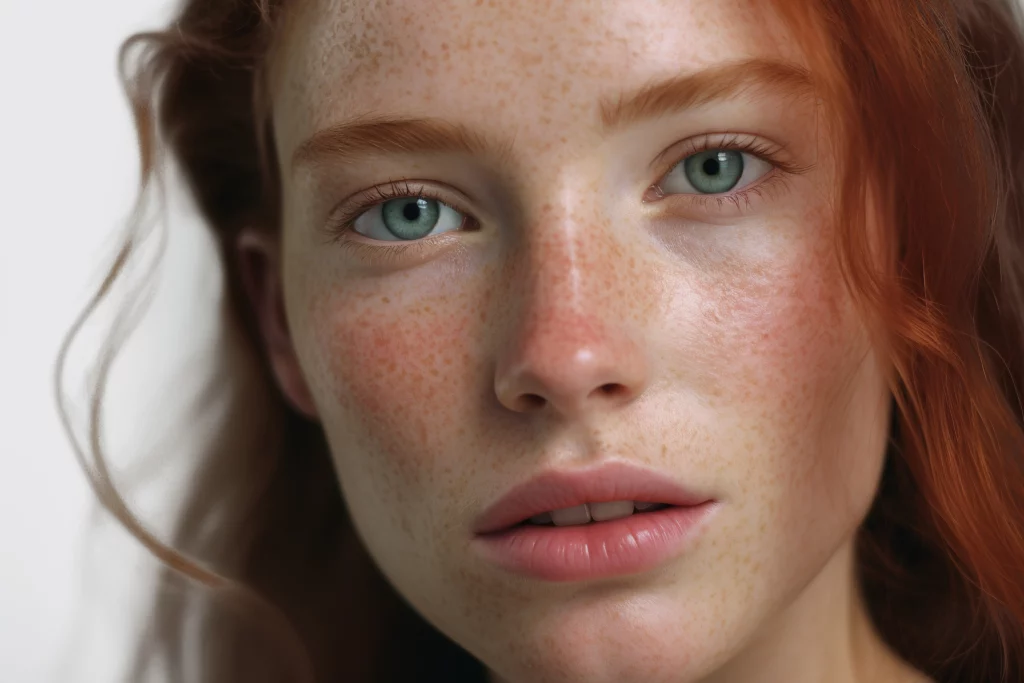
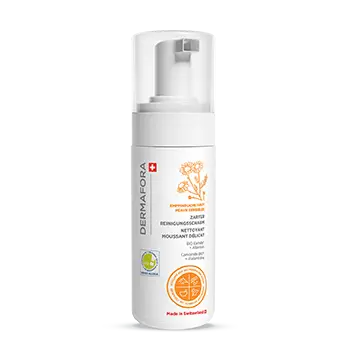
“Don’t be so sensitive!” While we can sometimes consciously influence certain processes of emotional sensitivity, it seems to be quite different with sensitive skin. Whether you call it fragile or sensitive, up to 30% of Swiss women would describe their own skin this way.
Understanding your skin better to take better care of it
The parameters that define sensitive skin are variable. Hypersensitivity can manifest in different ways and is also perceived with varying degrees of intensity depending on the sensation.
Skin described as “naturally reactive” generally has a thin epidermis (the top layer of the skin) which, through the irritation of nerve endings, visibly or tangibly indicates that it is out of balance.
The skin’s natural protective function can be weakened by external influences such as cold or dryness, as well as by stress.
And this stress becomes noticeable in different ways: sensations of tightness, redness, or slight itching can be among the consequences.
As the skin’s protective barrier weakens, fine lines also appear in greater numbers, and in some extreme cases, sensitive skin can even flake. The line between sensitive skin and allergic reactions is very thin—and unfortunately often variable.
Individuals who do not experience tangible relief when using dermatologically tested products specifically formulated for sensitive skin should consult a dermatologist to rule out potential allergies or other underlying causes.
The general rule is: “Perfect is the enemy of good.” It is better to rely on a few selected and tested active ingredients